
When Los Angeles let its partnership with Flock Safety lapse this past July, the decision was widely framed as a debate over privacy, data security, and government oversight. LAPD suspended its use of Flock’s automated license plate readers after concerns emerged about who controlled the data and how it could be shared with other agencies, including immigration authorities. Those are important questions. But a recent local convening I attended, hosted by Stop LAPD Spying and MediaJustice, raised a broader one: What if Flock is not the problem, but a symptom of a much larger system?
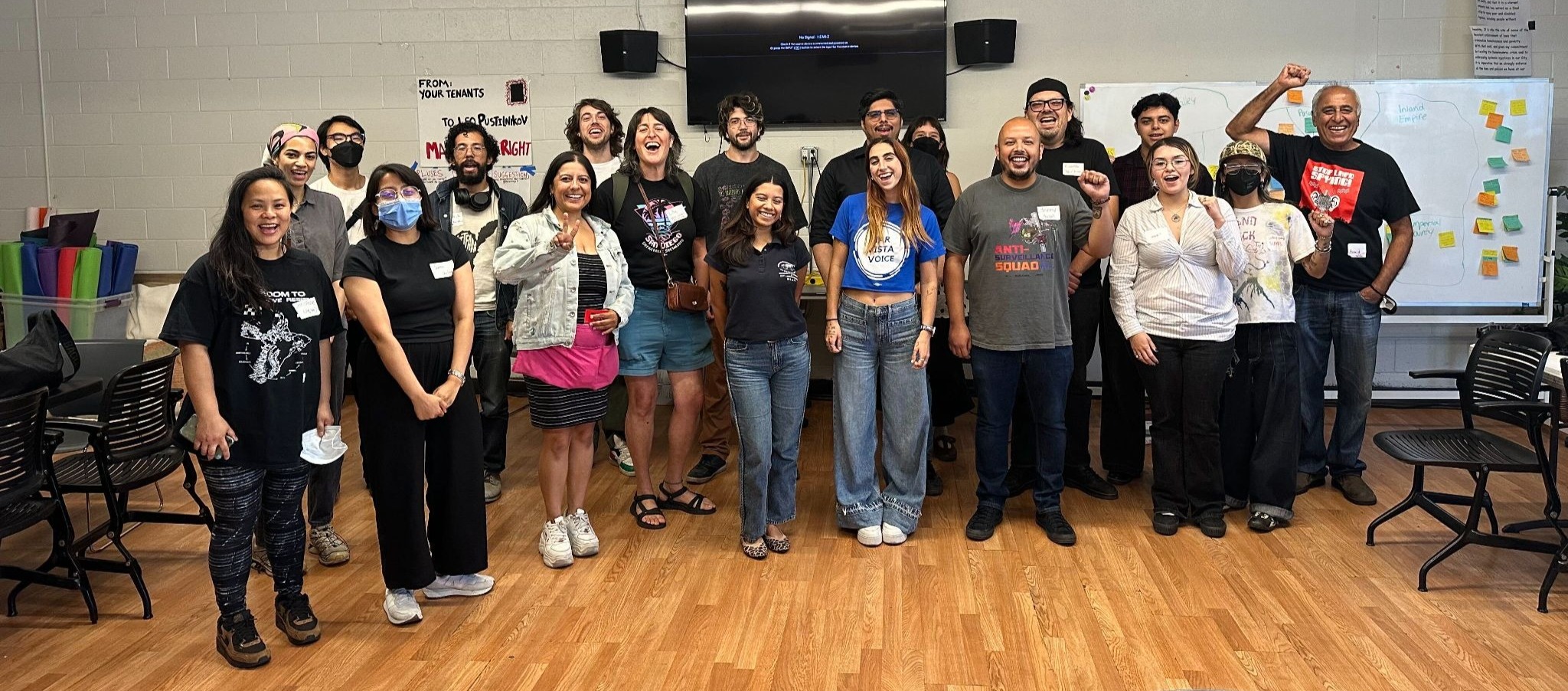
Throughout the convening, organizers repeatedly described the fight against “Big Tech” as “not a moment in time, but a continuation of history.” It is tempting to think of surveillance technology as a uniquely modern problem. Yet the underlying impulse to monitor, categorize, predict, and control people is nothing new, especially in America.
That idea also connected with concepts that arose in Edward Snowden’s Permanent Record, a book I became interested in after discussing his case in my MPPA Ethics class. Snowden describes the “Frankenstein effect” as the tendency for technological innovation to move faster than our ability to understand, regulate, or control its consequences. Although he was describing technology developed nearly two decades ago, the idea feels remarkably relevant to the technologies we are grappling with today. AI, facial recognition, automated license plate readers, and other forms of data-driven surveillance are developing faster than many of our laws and institutions can respond. If Flock is removed and replaced with another surveillance system, we may have addressed a particular technology without addressing the reasons the government continues to seek these technologies in the first place.
That distinction matters for public administration because government decisions about technology are often presented as technical questions: Does it work? Is it cost-effective? Is it legally feasible? But those questions do not necessarily ask who benefits from a system, who bears its costs, or what assumptions are built into it.
Consider what surveillance means in Los Angeles amid intensified immigration enforcement. For immigrant communities, the possibility that information about where people travel or live could become accessible to government agencies is not an abstract privacy concern. ICE raids and arrests have occurred in workplaces and other everyday community spaces across the region, creating an environment in which people may think twice about where they go, where they work, and whether it is safe to interact with public institutions.
For women, surveillance can create another set of risks. A recent Washington Post investigation identified at least 50 law-enforcement officers accused or charged with misusing license-plate reader systems, including cases in which officers used the technology to monitor wives, girlfriends, and ex-partners. Reproductive healthcare is also regulated differently across states, raising concerns about how location and travel data could be used in investigations of people who cross state lines to receive care.
I found myself connecting these ideas to Michel Foucault’s writing on surveillance and power. Foucault’s concept of the Panopticon describes a system in which people never know for certain whether they are being watched, creating the possibility that they begin regulating their own behavior because they know they could be observed. Surveillance, in this sense, is not only about catching people doing something wrong. It is also about shaping behavior – establishing what is considered normal, identifying what is considered suspicious, and encouraging people to monitor themselves.
Flock is not a literal Panopticon, but the comparison helps explain what makes modern surveillance different from simply having more cameras on the street. An ALPR system can quietly collect information about where people go without anyone first being suspected of a crime. That information can then be stored, analyzed, and interpreted later, potentially by people or institutions far removed from the original collection. The power comes not only from watching people, but from creating an infrastructure that makes it easier to categorize them and act on those categories.
These examples may seem distinct from Flock, but that is precisely the point, because surveillance systems do not operate in isolation. Information collected for one purpose can exist within a broader ecosystem of policing, data sharing, private technology, and government enforcement. A license plate reader does not know why someone is driving somewhere, just as a database does not know the circumstances behind the information it contains. Yet that information can become meaningful when combined with other systems and used to make decisions about who should be investigated, monitored, or considered a threat.
The consequences extend beyond privacy. When people begin changing where they work, travel, seek healthcare, access public services, or participate in public life because they fear being watched, surveillance has already changed the community it is supposedly intended to protect. It can shape who feels safe being visible, who feels comfortable seeking help, and who feels free to move through their own community. In that sense, surveillance is not simply a question of what information the government possesses; it is a question of who gets to participate fully in public life without fear of being watched.
This ecosystem extends beyond police departments and technology companies. Universities can also play a role in developing the ideas and technologies that eventually become embedded in policing. UCLA researchers, for example, developed predictive-policing models using historical crime data to predict where future crimes were likely to occur. The researchers worked with LAPD to test the model, and the department eventually adopted it across multiple divisions. The research was supported by federal funding from agencies including the Air Force Office of Scientific Research, the Office of Naval Research, and the Army Research Office.
The point is not that the researchers intentionally created a surveillance state. Rather, their work illustrates how seemingly neutral research can become part of a larger system of institutional power. If historical policing data reflects where police have traditionally concentrated their attention, using that data to determine where police should go next can reproduce those same patterns. The technology may be new, but the assumptions embedded in the data are not.
Fifty years ago philosopher, Michel Foucault, was writing extensively about the relationship between surveillance and power. Foucault’s concept of the Panopticon describes a system in which people can never be certain whether they are being watched, creating the possibility that they begin to regulate their own behavior simply because they know they could be observed. Surveillance, in this sense, is not only about catching people doing something wrong. It is a mechanism for shaping behavior – deciding what is considered normal, what is considered suspicious, and ultimately who is worthy of scrutiny.
Flock is not a literal Panopticon, but the framework is useful for understanding what makes this technology different from simply having more cameras on the street. An ALPR system can quietly collect information about where people go without requiring anyone to first be suspected of a crime. That information can then be stored, searched, shared, and interpreted later. The power comes not only from watching people, but from creating an infrastructure that makes it increasingly easy to watch, categorize, and act on information about them.
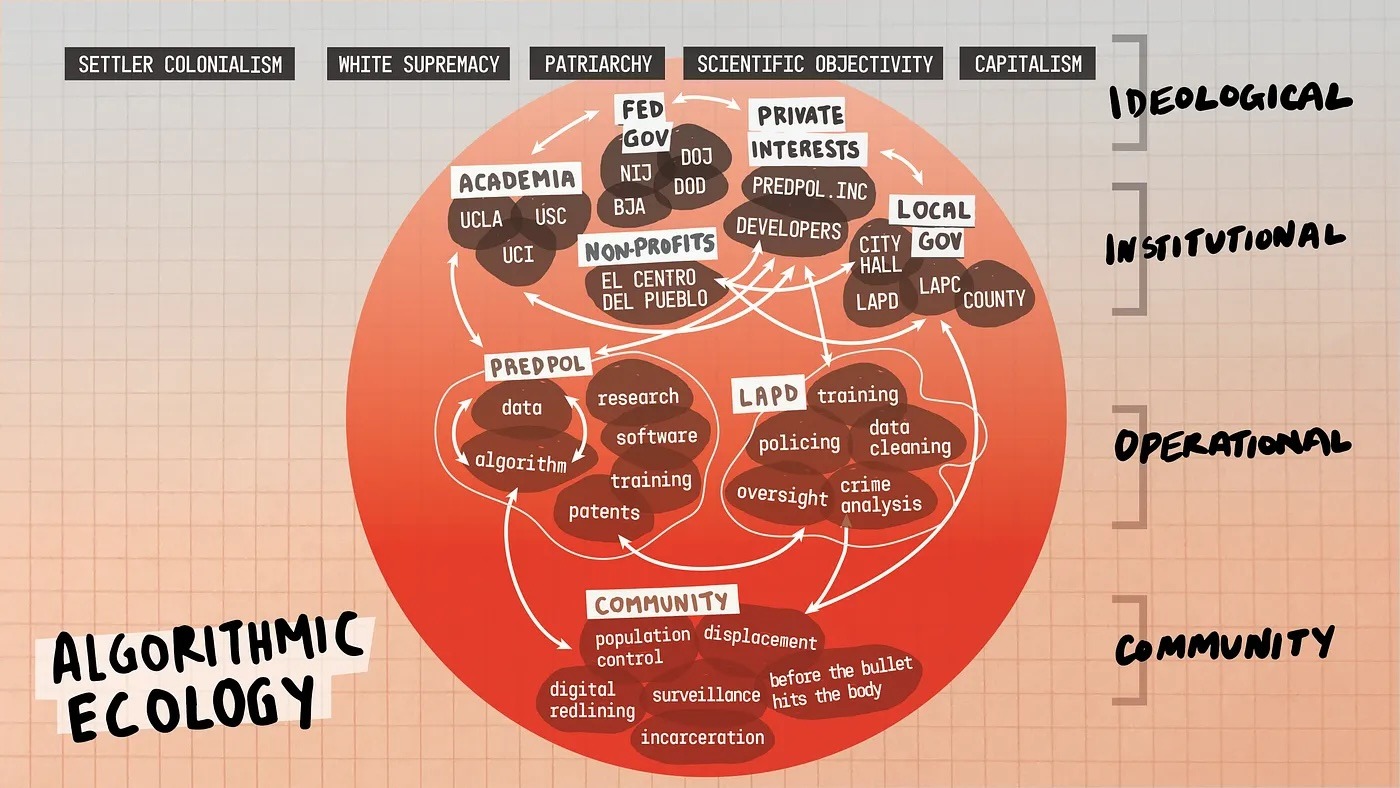
The distinction that the convening presenters made between reform and abolition is really where my eyes began to open. Reform asks how an existing system can be made safer, more transparent, and less harmful. In the case of surveillance, that might mean stronger privacy protections, limits on data sharing, public oversight, or restrictions on how technologies such as Flock can be used. These are all the classic considerations we are taught to think about in public policy work. Abolition, on the other hand, asks a more fundamental question – forcing us to think about why we need these systems to begin with, and if we could start from scratch, what would we build instead?
This does not mean reform is meaningless. Policies that reduce immediate harm matter, particularly for communities already experiencing the consequences of surveillance and policing. But reform can become limiting if it prevents us from questioning the larger purpose of the system. LAPD has historically used ALPR systems from multiple vendors, including Vigilant Solutions, a Motorola subsidiary, and Axon, illustrating how simply canceling a Flock contract does not necessarily mean changing the underlying system.
For public administrators, this distinction offers an important lesson. Our responsibility is not only to make government systems more efficient. It is also to examine the values those systems advance and to listen to the communities experiencing their consequences. This is also where the convening presenters connected with something we discuss repeatedly in the MPPA program: the importance of listening to communities rather than assuming that institutions know what communities need. Stop LAPD Spying organizers emphasized why the convening was held in Skid Row at LACAN intentionally in order to be rooted in a community that has historically been treated as a laboratory for new forms of policing and surveillance. They described their work as an effort to make Skid Row a laboratory for developing new ways to resist those systems. That kind of community-rooted expertise can be difficult to capture in a classroom.
Being in a room with people organizing to address policy failures reinforced for me how important – and often underrated – this kind of firsthand engagement is for public servants trying to understand how best to serve their constituents. In this case, the experience encouraged me to approach policy dilemmas not simply by asking how we can regulate a technology, but whether we should incorporate it into public systems in the first place. It also left me with questions that I think are worth carrying into public policy work: Who does a policy make safer? Who does it make more vulnerable? What assumptions are embedded in the data? And, ultimately, what kind of relationship between government and community are we building? Flock may be one technology, but those questions will remain long after the cameras are gone.