The Ecosystem of Surveillance: Lessons for Public Administrators from Los Angeles – By Julia Soares

When Los Angeles let its partnership with Flock Safety lapse this past July, the decision was widely framed as a debate over privacy, data security, and government oversight. LAPD suspended its use of Flock’s automated license plate readers after concerns emerged about who controlled the data and how it could be shared with other agencies, including immigration authorities. Those are important questions. But a recent local convening I attended, hosted by Stop LAPD Spying and MediaJustice, raised a broader one: What if Flock is not the problem, but a symptom of a much larger system?
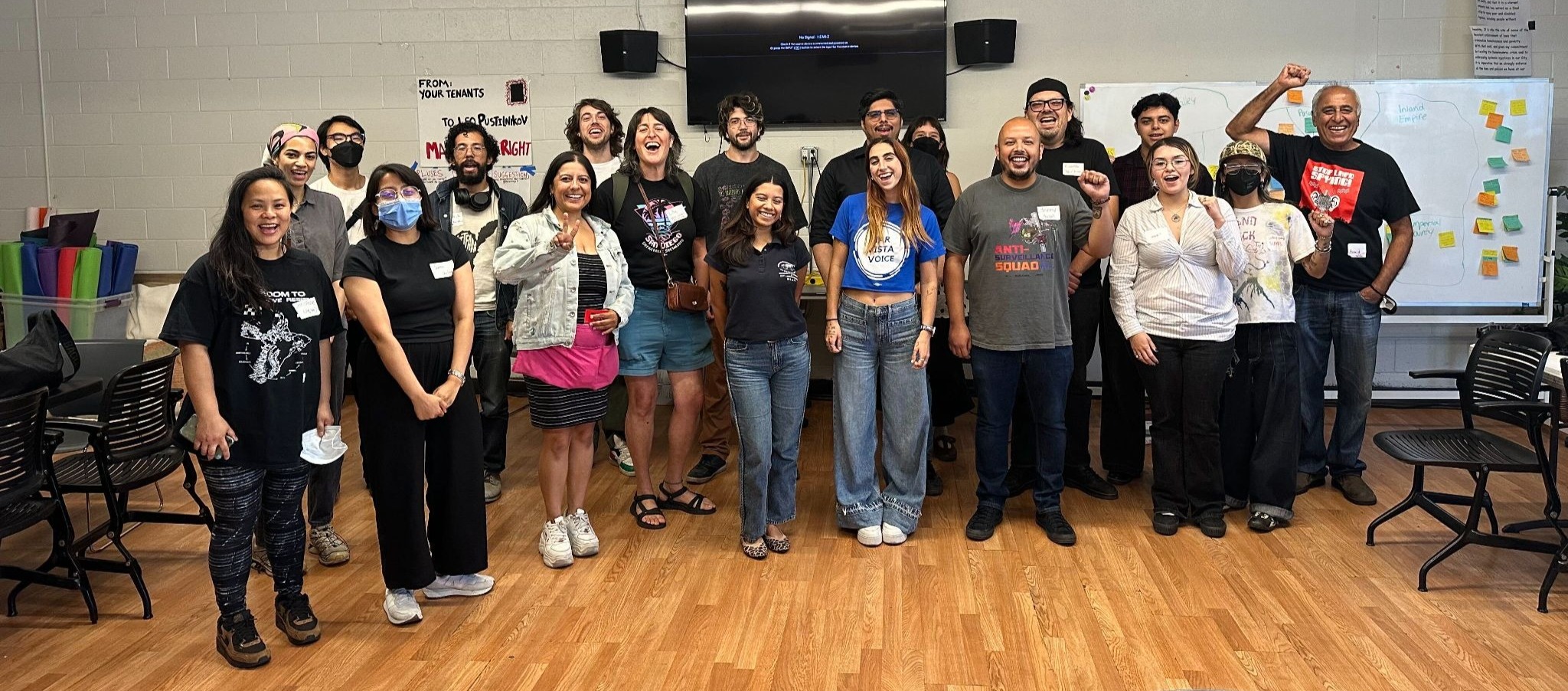
Throughout the convening, organizers repeatedly described the fight against “Big Tech” as “not a moment in time, but a continuation of history.” It is tempting to think of surveillance technology as a uniquely modern problem. Yet the underlying impulse to monitor, categorize, predict, and control people is nothing new, especially in America. 

That idea also connected with concepts that arose in Edward Snowden’s Permanent Record, a book I became interested in after discussing his case in my MPPA Ethics class. Snowden describes the “Frankenstein effect” as the tendency for technological innovation to move faster than our ability to understand, regulate, or control its consequences. Although he was describing technology developed nearly two decades ago, the idea feels remarkably relevant to the technologies we are grappling with today. AI, facial recognition, automated license plate readers, and other forms of data-driven surveillance are developing faster than many of our laws and institutions can respond. If Flock is removed and replaced with another surveillance system, we may have addressed a particular technology without addressing the reasons the government continues to seek these technologies in the first place.

That distinction matters for public administration because government decisions about technology are often presented as technical questions: Does it work? Is it cost-effective? Is it legally feasible? But those questions do not necessarily ask who benefits from a system, who bears its costs, or what assumptions are built into it.

Consider what surveillance means in Los Angeles amid intensified immigration enforcement. For immigrant communities, the possibility that information about where people travel or live could become accessible to government agencies is not an abstract privacy concern. ICE raids and arrests have occurred in workplaces and other everyday community spaces across the region, creating an environment in which people may think twice about where they go, where they work, and whether it is safe to interact with public institutions. 

For women, surveillance can create another set of risks. A recent Washington Post investigation identified at least 50 law-enforcement officers accused or charged with misusing license-plate reader systems, including cases in which officers used the technology to monitor wives, girlfriends, and ex-partners. Reproductive healthcare is also regulated differently across states, raising concerns about how location and travel data could be used in investigations of people who cross state lines to receive care. 

I found myself connecting these ideas to Michel Foucault’s writing on surveillance and power. Foucault’s concept of the Panopticon describes a system in which people never know for certain whether they are being watched, creating the possibility that they begin regulating their own behavior because they know they could be observed. Surveillance, in this sense, is not only about catching people doing something wrong. It is also about shaping behavior – establishing what is considered normal, identifying what is considered suspicious, and encouraging people to monitor themselves.

Flock is not a literal Panopticon, but the comparison helps explain what makes modern surveillance different from simply having more cameras on the street. An ALPR system can quietly collect information about where people go without anyone first being suspected of a crime. That information can then be stored, analyzed, and interpreted later, potentially by people or institutions far removed from the original collection. The power comes not only from watching people, but from creating an infrastructure that makes it easier to categorize them and act on those categories.

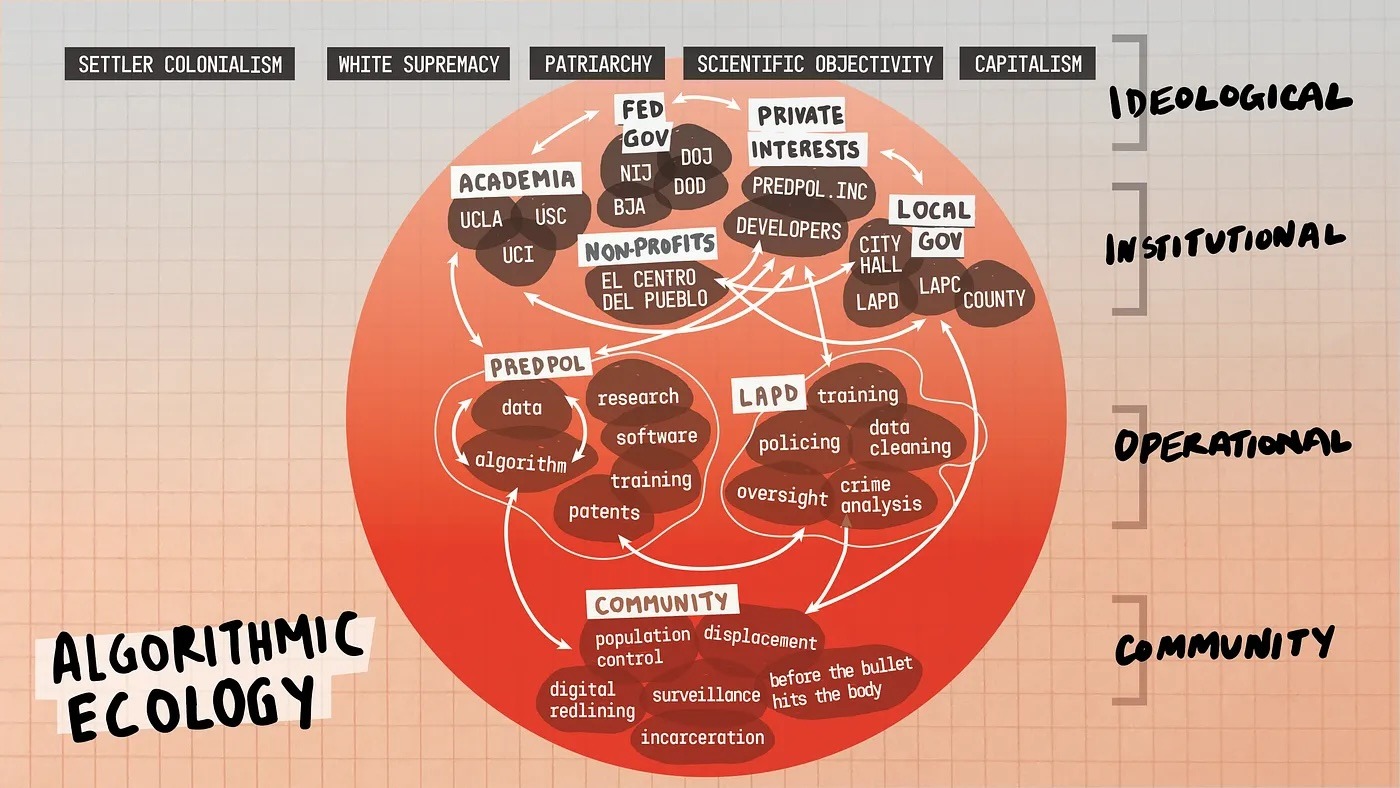
These examples may seem distinct from Flock, but that is precisely the point, because surveillance systems do not operate in isolation. Information collected for one purpose can exist within a broader ecosystem of policing, data sharing, private technology, and government enforcement. A license plate reader does not know why someone is driving somewhere, just as a database does not know the circumstances behind the information it contains. Yet that information can become meaningful when combined with other systems and used to make decisions about who should be investigated, monitored, or considered a threat.

The consequences extend beyond privacy. When people begin changing where they work, travel, seek healthcare, access public services, or participate in public life because they fear being watched, surveillance has already changed the community it is supposedly intended to protect. It can shape who feels safe being visible, who feels comfortable seeking help, and who feels free to move through their own community. In that sense, surveillance is not simply a question of what information the government possesses; it is a question of who gets to participate fully in public life without fear of being watched.

This ecosystem extends beyond police departments and technology companies. Universities can also play a role in developing the ideas and technologies that eventually become embedded in policing. UCLA researchers, for example, developed predictive-policing models using historical crime data to predict where future crimes were likely to occur. The researchers worked with LAPD to test the model, and the department eventually adopted it across multiple divisions. The research was supported by federal funding from agencies including the Air Force Office of Scientific Research, the Office of Naval Research, and the Army Research Office.

The point is not that the researchers intentionally created a surveillance state. Rather, their work illustrates how seemingly neutral research can become part of a larger system of institutional power. If historical policing data reflects where police have traditionally concentrated their attention, using that data to determine where police should go next can reproduce those same patterns. The technology may be new, but the assumptions embedded in the data are not.

Fifty years ago philosopher, Michel Foucault, was writing extensively about the relationship between surveillance and power. Foucault’s concept of the Panopticon describes a system in which people can never be certain whether they are being watched, creating the possibility that they begin to regulate their own behavior simply because they know they could be observed. Surveillance, in this sense, is not only about catching people doing something wrong. It is a mechanism for shaping behavior – deciding what is considered normal, what is considered suspicious, and ultimately who is worthy of scrutiny.

Flock is not a literal Panopticon, but the framework is useful for understanding what makes this technology different from simply having more cameras on the street. An ALPR system can quietly collect information about where people go without requiring anyone to first be suspected of a crime. That information can then be stored, searched, shared, and interpreted later. The power comes not only from watching people, but from creating an infrastructure that makes it increasingly easy to watch, categorize, and act on information about them.
The distinction that the convening presenters made between reform and abolition is really where my eyes began to open. Reform asks how an existing system can be made safer, more transparent, and less harmful. In the case of surveillance, that might mean stronger privacy protections, limits on data sharing, public oversight, or restrictions on how technologies such as Flock can be used. These are all the classic considerations we are taught to think about in public policy work. Abolition, on the other hand, asks a more fundamental question – forcing us to think about why we need these systems to begin with, and if we could start from scratch, what would we build instead?

This does not mean reform is meaningless. Policies that reduce immediate harm matter, particularly for communities already experiencing the consequences of surveillance and policing. But reform can become limiting if it prevents us from questioning the larger purpose of the system. LAPD has historically used ALPR systems from multiple vendors, including Vigilant Solutions, a Motorola subsidiary, and Axon, illustrating how simply canceling a Flock contract does not necessarily mean changing the underlying system.

For public administrators, this distinction offers an important lesson. Our responsibility is not only to make government systems more efficient. It is also to examine the values those systems advance and to listen to the communities experiencing their consequences. This is also where the convening presenters connected with something we discuss repeatedly in the MPPA program: the importance of listening to communities rather than assuming that institutions know what communities need. Stop LAPD Spying organizers emphasized why the convening was held in Skid Row at LACAN intentionally in order to be rooted in a community that has historically been treated as a laboratory for new forms of policing and surveillance. They described their work as an effort to make Skid Row a laboratory for developing new ways to resist those systems. That kind of community-rooted expertise can be difficult to capture in a classroom.

Being in a room with people organizing to address policy failures reinforced for me how important – and often underrated – this kind of firsthand engagement is for public servants trying to understand how best to serve their constituents. In this case, the experience encouraged me to approach policy dilemmas not simply by asking how we can regulate a technology, but whether we should incorporate it into public systems in the first place. It also left me with questions that I think are worth carrying into public policy work: Who does a policy make safer? Who does it make more vulnerable? What assumptions are embedded in the data? And, ultimately, what kind of relationship between government and community are we building? Flock may be one technology, but those questions will remain long after the cameras are gone.

A Liberal Arts Foundation for Public Service? What my Maxwell School education taught me about “liberal arts” and a “technical education” – Dr.Sabith Khan

wikilovesmonuments.us

During our inaugural Fall retreat for the faculty this year, the opening theme was focused around the theme of “Future ready graduate: Skills, values and community impact.” The discussion had a strong focus on the relevance of a liberal arts education in the US and how it is relevant to the world we live in.

This issue of relevance of education and return on investment has been at the heart of a technical education vs. humanities debate, which is part of the larger debate about the value of Higher ed in today’s world. My own journey to academia and social sciences (aligned with liberal arts and interdisciplinary work) has been circuitous and begins with a very technical field.

I graduated with a bachelors in Engineering, though had a knack for writing and communications. Soon after graduating, I jumped head on, starting my own communications consulting firm and subsequently working for Ogilvy & Mather in their PR unit for a while. This led to other opportunities in other firms and eventually, I made it to the Maxwell School of Syracuse University for an MPA and MA in International Relations.

I applied for just three programs, while I was working in the Middle East, ranked #1, #2 and #3, respectively – they were Maxwell School at Syracuse Uni, Harvard Kennedy School at Columbia and the school at Columbia Uni. I got accepted to Maxwell, with a scholarship! The decision was made for me. Why did I choose to come here?

It was largely becasue at the heart of Syracuse University’s Maxwell School of Citizenship and Public Affairs lies a distinctive educational philosophy: the belief that professional training in public policy and administration is most powerful when rooted in the liberal arts. This approach, which integrates professional MPA and other technical programs with interdisciplinary social science, produces graduates who are not merely skilled technicians but engaged citizens equipped to tackle complex societal challenges. I was enrolled in a dual MPA-MA(IR) focus so needed strong foundational courses in social sciences, that Maxwel school provided.

The Maxwell School, established in 1924, was founded on the principle of teaching citizenship to all Syracuse undergraduates. This commitment to civic engagement remains central to its identity, distinguishing it from traditional professional schools. I had the most intellectually stimulating time of my adult life at Maxwell School, where I was a Graduate Assistant at the Moynihan Institute and worked with one of the foremost experts on Iran, Dr. Mehrzad Boroujerdi.

As the only graduate school whose professional programs in public administration and international affairs are fully integrated with social science departments, Maxwell offers a truly distinctive educational model. Its faculty of 170 scholars across six social science disciplines: anthropology, economics, geography, history, political science, and sociology; provide students with multiple lenses through which to understand policy problems. I attended classes in many of these disciplines as the elective structures let me take classes in many disciplines, with few restrictions.

The school’s flagship Master of Public Administration program, created over 90 years ago as the nation’s first such professional program, embodies this interdisciplinary philosophy.

As I learned during my time there, the MPA program emphasizes three areas of mastery: formulating, implementing, and evaluating policy; leading organizations with diverse stakeholders; and applying rigorous evidence-based analysis. These skills, however, are not taught in isolation. Maxwell’s faculty engage in applied interdisciplinary research, bridging theoretical frameworks with practical application. This blending ensures that policy decisions are understood within their cultural, historical, and social contexts.

Practical experience in interdisciplinary learning can be seen in the Maxwell classroom. In one course, MPA students worked alongside engineering students on complex policy projects, from lead service line replacement to automated vehicle regulation. My own capstone project involved an NGO (Near East Foundation) that worked with refugees in the Middle East and focused on workforce development and job creation for them.

As an Engineer, I learned to write policy briefs, while all MPA students grappled with technical infrastructure challenges: demonstrating how policy and technical expertise must inform one another. The instructor noted that MPA students excel at articulating policy arguments and applying current events to their analysis, skills honed through exposure to multiple disciplines.

This commitment to broad-based education extends to Maxwell’s undergraduate programs, offered in partnership with the College of Arts and Sciences. As I followed the schools work post graduation, the liberal arts core is being reimagined to address contemporary challenges like climate change, social justice, and human well-being, moving from traditional disciplinary perspectives toward thematic approaches that reflect an interconnected world. As one Maxwell associate dean observed, students with narrow professional ambitions are “just like the bear who sees the other side of the mountain”; true education requires crossing disciplinary lines to bridge ideas, cultures, and languages. The University’s longstanding principle has been that “just providing liberal education or just providing professional training is not where society needs education to be”.

Some of my professors were leaders of global organizations, including Prof. Catherine Bertini, former Head of World Food Program, Prof. Walter Broadnax (one of my favorite professors),

It is a testament to this unique model of blending liberal arts education with a very technical education that made my Maxwell experience unique. This model has earned Maxwell recognition as the #1 ranked graduate school of public affairs in the nation. Its success reflects a larger truth: today’s public challenges: from environmental sustainability to national security, all demand leaders who can synthesize perspectives and adapt to evolving conditions. As I look at Maxwell School’s enduring contribution, I realize it lies in understanding that effective public service requires not just technical competence but the critical thinking, ethical reasoning, and broad understanding that only a liberal arts education can provide.

Disciplinarity is a norm in today’s academia and though specialization is needed in many respects; getting bogged down in one’s discipline while ignoring the “big picture” can produce people and graduates who are inept at understanding the world, as it is.

I try to bring this to the classroom and in the program management at Cal Lutheran and hope that you see the value of this approach.

A Student’s Perspective: The Voinovich Challenge

~ Madison Bartula-Henkle

mads iorem

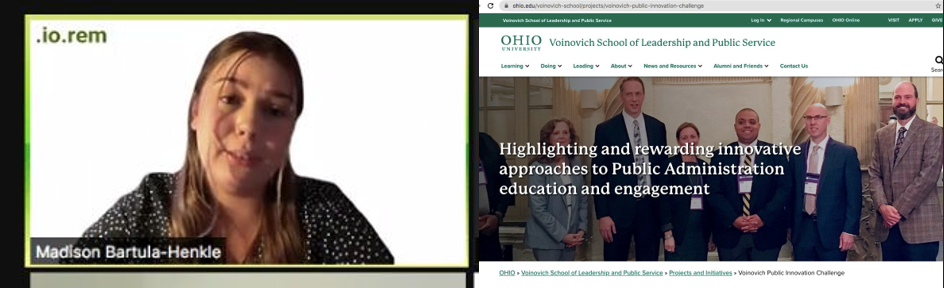
For those of you who I have not met yet, my name is Madison, and I am finishing up my MPPA degree this year. As I am sure most of you know, one great part of this program is the amount of career and skill-building opportunities our professors and advisors share with us. Through this program, I learned about Dr. Khan’s nonprofit organization IOREM. Dr. Khan co-founded the International Organization for Remittances and Migration in 2020. This past spring, IOREM wanted to bring on a student intern, and I jumped at the opportunity to work in the nonprofit sector.

Since being with IOREM, I have been working wherever needed. I even got the opportunity to help plan and facilitate our Summer Workshop, which took place in August. Our biggest win thus far was taking home second place in the Voinovich Challenge for Public Innovation. The challenge is run by the Voinovich School at Ohio University, in collaboration with NASPAA (Network of Schools of Public Policy, Affairs, and Administration). 

I was both terrified and elated when Dr. Khan asked me to present with him. I still get nervous when it comes to public speaking, and I knew how significant this opportunity was for IOREM. I was so honored that Dr. Khan trusted me enough for the job and the competition. We spent a lot of time fine tuning and practicing our presentation. On October 29th, Dr. Khan and I presented IOREM and our upcoming research project to a panel of esteemed judges, some of whom were former winners of the challenge. After all was said and done, we took home second place! 

Working with IOREM has taught me so much; not only about the industry but about myself. I have been able to build my professional and personal skills thanks to this opportunity. Ultimately, read your emails and take advantage of everything this program can give you! 

Barter is Alive and Well in Oaxaca, Mexico

~Sabith Khan, Ph.D.

Oaxaca Woman (2)

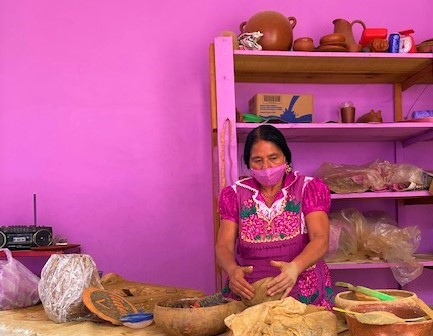
Here is a discovery I made, based on one interview in Oaxaca, Mexico. I know that for a scientifically reliable insight, a sample size of one is not considered reliable. However, indulge me as I share one remarkable insight into how artisans and crafts persons are surviving the pandemic in Oaxaca, Mexico.  The secret: through barter.

On a recent visit to one of the pueblos in the vicinity of Oaxaca de Juarez in Oaxaca, I encountered an artisan – a lady who works with red clay – and is someone part of a women’s cooperative formed about 20 years ago.

The potters who form the cooperative are all women who work with clay to form various types of products – plates for food, ornamental objects for decoration, and kitchen utensils, too. This has been a way of life for them for centuries, and though sometimes times are tough, these women have stuck it out. I was interested in learning more about how they are surviving the pandemic. One of the women said, “Well, we are not asking for money anymore. We are ok with barter. If a farmer pays us with onions or tomatoes instead of cash, we are ok with it.” Oaxaca Pottery

“So, barter is what you are doing,” a colleague of mine inquired.

“Yes, we don’t call it that; but yes, an exchange of somewhat equal value.”

The leader of the group, Doña Macarena, was not too happy with this setup. Though she didn’t speak to the is sue of barter directly, she pointed out that people sometimes don’t recognize the value and craft involved in making clay pots. “We are artisans making beautiful products, and sometimes we find people who don’t recognize our talents and work,” she said.

However, as I prepared to leave the workshop, after a lively demonstration during which Doña Macarena made a Comal for us, in no more than 10 minutes, an exquisite plate-like object, she added that this was the very first clay object that she learnt to make from her own mother. “I am happy to be keeping up the tradition and knowledge; that is how we survive,” she added. That, and a little bit of innovation and a little bit of pragmatism seem to be the trick to surviving the pandemic for these artisans.